Wedding Dress Alterations Fort McMurray | Expert Bridal Tailoring
Wedding dress alterations, all year round.
Bring your dress, wedding shoes and the undergarments you plan to wear. We can assess the fit, discuss your requested changes and agree a fitting schedule around your wedding date.
Need it sooner? Call to confirm same-day or rush availability.
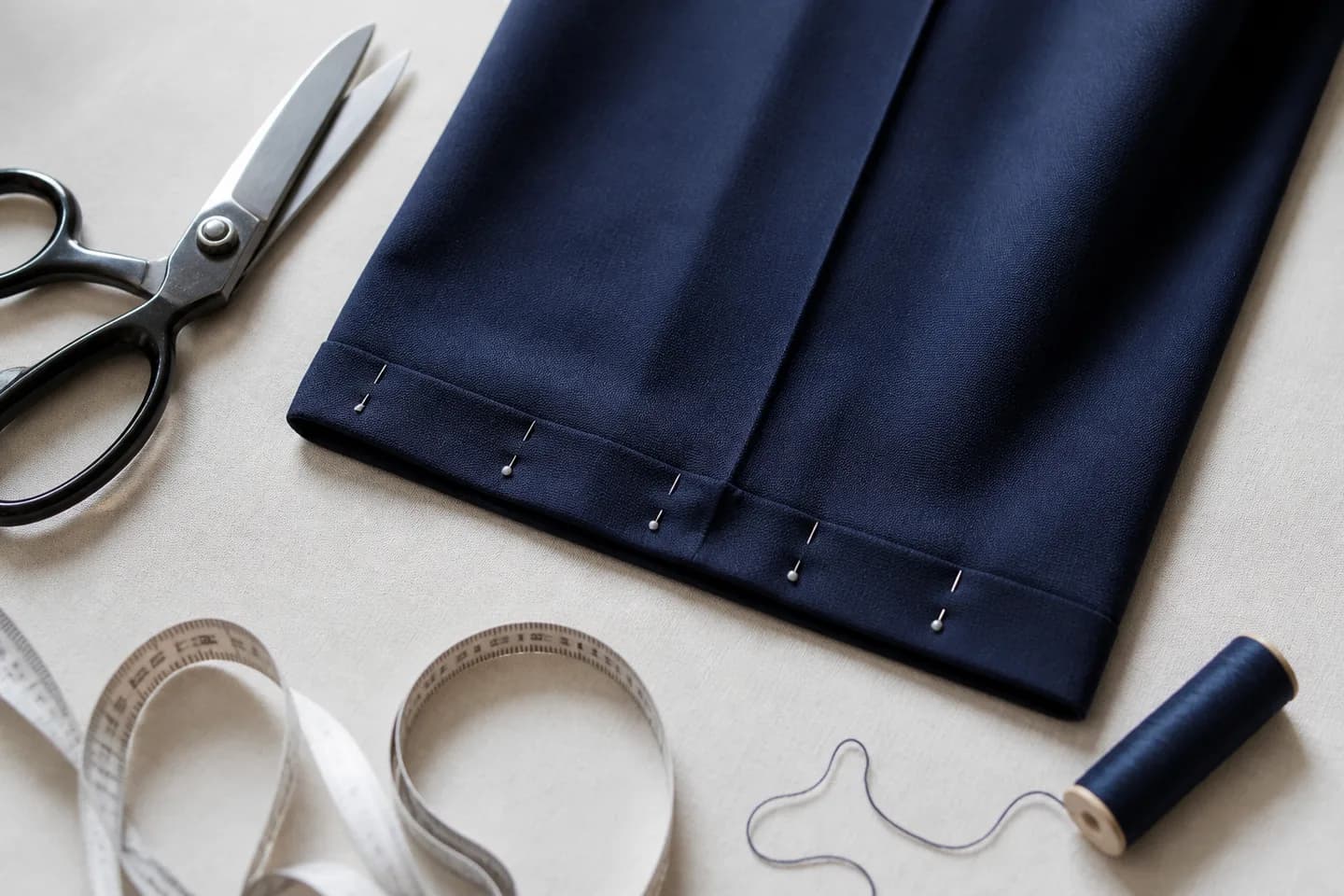
AI-generated service illustration; not a photograph of our premises.
Alterations by Dress Style
Every silhouette presents different alteration challenges. Our Fort McMurray bridal tailors have worked with every style — here is what each requires.
A-Line & Princess
The most alteration-friendly silhouette. The fitted bodice and flared skirt mean waist and bust adjustments are straightforward, and hem work is predictable. Common alterations: hem shortening, waist suppression, strap adjustment, bustle addition for a cathedral or chapel train. If you purchased your gown in a different size than you plan to wear, A-line construction gives our tailors the most flexibility.
Mermaid & Trumpet
The most fit-dependent silhouette — every centimetre of the hip-to-knee section must be exact. Mermaid and trumpet gowns are typically bought closer to the intended size because the tolerance for error is much smaller. Common alterations: waist and hip refinement, hem flare adjustment, strap repositioning, back closure narrowing. Beaded mermaid gowns require hand-finishing at every alteration point to preserve the embellishment line.
Ballgown
The fullest and most dramatic silhouette — and often the most complex to hem because multiple layers (outer fabric, crinoline, underskirt) must all be cut and finished consistently. Common alterations: multi-layer hem, bodice suppression, bustle construction, strap and sleeve adjustment. Ballgown bustles are typically the most elaborate — a French or Austrian bustle on a full ballgown involves multiple internal tie points to gather the train properly without visible bulk.
Sheath & Column
Clean, minimal, and unforgiving of imprecision. Sheath gowns sit close to the body from shoulder to hem, so every adjustment is visible. Common alterations: overall size reduction (taking in throughout the length), neckline refinement, strap conversion (from halter to strapless or vice versa), slit addition for walking comfort, hem shortening. Silk and satin sheaths require hand-pressing after alteration — machine pressing can create permanent shine marks on these fabrics.
Off-Shoulder & Illusion
Off-shoulder sleeves and illusion necklines (sheer tulle panels with strategically placed lace or beading) require particular care because the structural seams are often hidden inside the decorative fabric. Shortening an off-shoulder sleeve changes how the whole bodice sits. Altering around an illusion panel without disturbing the embellishment placement is technically demanding — our tailors map the beading pattern before cutting to maintain visual symmetry after the alteration.
Two-Piece & Separates
Two-piece bridal looks — a fitted crop top with a skirt, or a removable overskirt — are growing in popularity and present unique alteration requirements because top and skirt must be fitted independently while maintaining proportion. Common alterations: top suppression, skirt waistband adjustment, hem shortening on both pieces separately. For brides converting from a single-piece gown to a two-piece look, we can also construct separates from an existing gown.
The Alteration Process: Consultation to Pickup
Most brides go through two to four appointments. Here is what each involves — and why we recommend starting at least two to three months before your wedding date.
Assessment Fitting — Free, No Appointment Needed
Bring your gown, your shoes, and any undergarments you plan to wear. Our tailor examines the construction, identifies what needs to be changed, and explains options and pricing before any work begins. This appointment typically takes 20–40 minutes depending on the complexity of the gown. You leave with a confirmed price and a timeline.
Alteration Work — One to Three Weeks
Depending on the alterations needed, work takes one to three weeks. A straightforward hem on a single-layer chiffon gown is faster than a full bodice restructuring with hand-finished beading. We contact you when the gown is ready for the mid-alteration fitting.
Mid-Alteration Fitting — Check and Adjust
For more complex alterations, we schedule a mid-work fitting to confirm the direction before completing the remaining work. Bodice adjustments in particular benefit from a check fitting before final finishing — catching fit issues while seams are still open is far easier than reopening finished work. Brides who skip this step sometimes need work reopened, which adds time.
Final Fitting — Last Tweaks
You try on the completed gown. Our tailor checks the hang, the movement, the bustle function, and every seam. Any final tweaks — a hem that needs a centimetre more, a strap that pulls slightly — are addressed here. For most gowns, this appointment is 15–20 minutes and results in same-day completion of minor adjustments. Allow one to two weeks between this appointment and your wedding date.
Pickup and Preservation
Your gown leaves our shop pressed, bagged, and ready to wear. If you want to preserve your wedding dress after the event, we offer professional cleaning and preservation boxes that protect against yellowing and fabric degradation for decades. Ask about our preservation service at your assessment appointment.
Bustle Types Explained
If your gown has a train, you need a bustle to dance and move comfortably at the reception. We construct and secure all bustle styles — here is what each looks like.
American Bustle (Over-Bustle)
The most common style. The train is lifted up and secured to the outside back of the gown with loops and buttons. Clean, simple to operate, and works with most gown styles. Best for A-line and princess gowns with moderate trains.
French Bustle (Under-Bustle)
The train is tucked underneath the gown and secured with a series of internal ties. Creates a full, layered look at the back. Works beautifully with ballgowns and princess silhouettes. More complex to fasten — we always show the bride and a helper how to operate it before pickup.
Austrian Bustle
Multiple loops gather the train at several points, creating a layered cascade effect at the back. Popular for heavily beaded and lace gowns where the detail should remain visible when bustled. More tie points than a French bustle — typically 6 to 10 hooks depending on train length.
Wrist Bustle
A loop sewn inside the train that the bride hooks over her wrist to carry the train when walking. Not a true attached bustle — the bride holds the train rather than having it secured to the gown. Common for cathedral-length trains and gowns where attaching the train to the body would distort the silhouette.
Call the Store for Wedding Dress Alteration Pricing
We do not publish wedding dress alteration prices online. Call the store for current pricing and service availability.
Call (587) 276-2998Wedding Dress Alterations — Common Questions
How much do wedding dress alterations cost in Fort McMurray?
Call the store at (587) 276-2998 for current pricing and service availability.
How long do wedding dress alterations take?
Two to four weeks for most gowns, from first fitting to pickup. Complex alterations or heavily beaded gowns may take longer. We recommend starting two to three months before your wedding date — peak season (April–August) books up. Call (587) 276-2998 if your date is close and we will tell you what is achievable.
When should I start my wedding dress alterations?
Two to three months before the wedding minimum. Four months during spring and summer peak season. This allows time for the assessment fitting, alteration work, a mid-alteration check, the final fitting, and any last-minute tweaks. Your final pickup should be at least one week before the wedding.
Do you do bridesmaid dress alterations in Fort McMurray?
Yes. Hem shortening, waist adjustment, strap work, and back closure alterations are all common bridesmaid services. For groups of four or more, call ahead to coordinate scheduling so all dresses are ready at the same time.
Can you alter all dress types — mermaid, ballgown, A-line?
Yes. We work with all bridal silhouettes and fabrics: silk, satin, chiffon, organza, tulle, lace, beaded, sequined, and fabric blends. If a specific alteration is not achievable on your gown's construction, we will tell you at the assessment before any work begins.
Do you offer wedding dress preservation in Fort McMurray?
Yes. After the wedding, we clean the gown and box it for long-term preservation. Fort McMurray's dry climate is actually good for textile preservation — but champagne, makeup, and body oil stains must be cleaned before boxing or they will oxidize and become permanent over time. Ask at your first appointment.
Learn More About Wedding Dress Care
Wedding Dress Preservation in Fort McMurray
Preserve your wedding dress for generations. Expert preservation techniques, storage tips, and why Fort McMurray's climate requires special care.
Read ArticleWhen to Alter vs Buy New
Professional advice on when to invest in alterations versus purchasing new garments. Save money and extend garment life.
Read ArticleVisit our Fort McMurray store
Bring your items in, or call us with a question.
Sunshine Dry Cleaners & More
129-375 Loutit Rd, Eagle Ridge, Fort McMurray, AB T9K 0Z5
Mon–Fri 9 am–6 pm · Sat 10 am–5 pm